Insights
How Digital Fueling Sign-Off Improves Fuel Reconciliation Accuracy

Suraj Singh
Marketing Director, i6 Group

Fuel reconciliation is a matching problem, and every manual step in it adds margin for error. The same uplift gets captured twice by hand, once by whoever delivers the fuel and once by whoever receives it, then matched weeks later. Digital fueling removes those manual steps: capture one agreed figure where the fuel moves, then reconcile it automatically. What changes:
Picture the end of the month. Someone in finance has the delivery records on one side and the uplift records on the other, and the two do not line up. A few hundred litres here, a grade logged differently there, a ticket nobody can quite read. Multiply that across thousands of flights and several sites and reconciliation stops being a tidy monthly close. It becomes days of chasing numbers that were written by hand and never properly agreed in the first place.
That is the heart of it: every manual step before the match adds a little more room for the two sides to disagree. Whoever delivers the fuel records what they supplied, whoever receives it records what they got, and the figures only meet later. When the number starts life on a paper ticket, handwritten on the stand and rekeyed afterward, each hand-off is a chance for a discrepancy to creep in: a misread digit, a transposed figure, a volume-to-mass conversion applied differently at each end. It is not carelessness. It is what happens when a number passes through several sets of hands.
And it is not only an airline problem. Fuel farms reconciling tank stock across sites, and suppliers who lose sight of their fuel the moment it passes to an into-plane operator, run into the same thing: different systems, different formats, and no single version of the number everyone trusts.
.png)
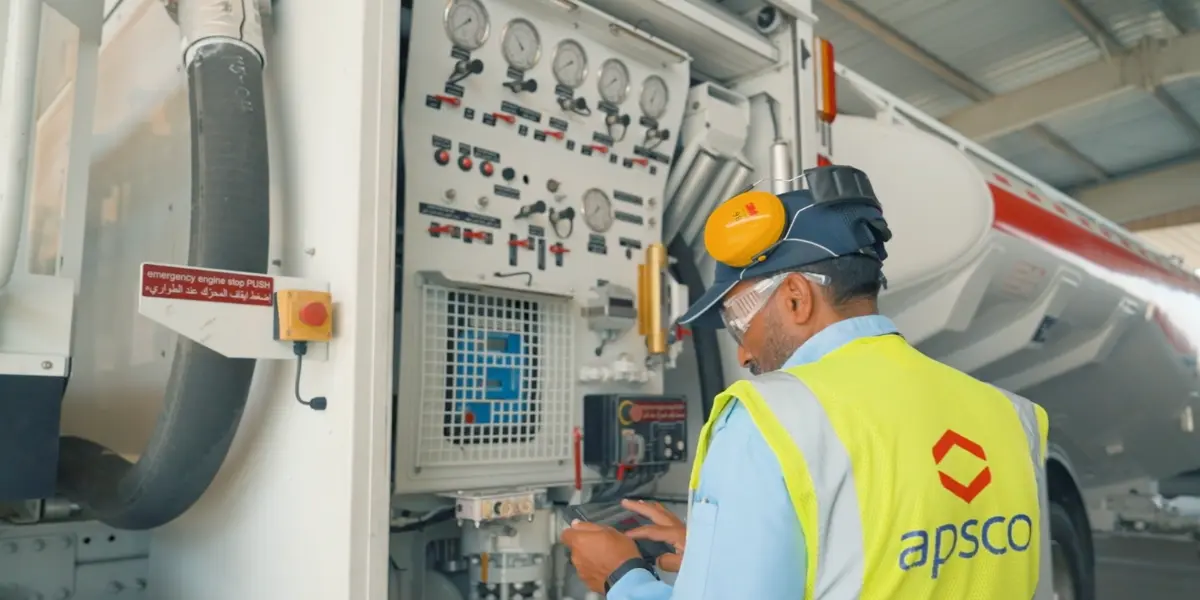
Accurate reconciliation starts with accurate capture, so i6 captures the figure once, where it is real. On the airline side, eHandshake has the flight crew and the into-plane fueler agree grade and quantity digitally on the stand. On the operator side, i6's into-plane platform reads the uplift straight off meter-linked tablets, so the number comes from the equipment, not a docket. Either way there is one figure, captured at source, with nothing to rekey, and every manual step removed is another margin for error gone.
From there, the matching happens automatically. i6 tracks stock movements across tanks, vehicles and sites and keeps the books audit-ready, so the daily reconciliation stops being a spreadsheet someone has to wrestle into balance. Stock and into-plane activity sit in one view instead of separate systems, so suppliers can invoice sooner and stand behind the number. The figure that was loaded is the figure that gets reconciled, billed and reported, and everyone works from the same record.
--------------------------
The clearest proof is EPPCO, the largest into-plane operator at Dubai International. It moved off paper tickets and manual entry onto i6's into-plane platform with meter-linked tablets, and eliminated invoicing errors entirely. “Their technology has eliminated all invoicing errors, saving us accounting time and costs,” says Nitin Pradhan, Head of Operations and Projects at EPPCO Aviation.
The same pattern holds further up the chain. World Fuel runs i6 across 60+ locations for centralized stock visibility and automated invoicing, and Shell Aviation has rolled it out across its global fuel operations for consistent control site to site. And on the airline side, Ryanair's Steven Fitzgerald puts the commercial case plainly: a digital fuel platform “will help us reduce manual errors. It reduces disputes with fuel suppliers. It reduces errors in reporting.”
i6
.png)
--------------------------
Accurate reconciliation is not just tidier books. It is faster time-to-invoice, fewer disputes to resolve, and one fuel figure that operations, finance and sustainability can all trust, because it is the same number, captured once. Get the uplift right where it happens, and everything downstream, from the invoice to the emissions report, inherits that accuracy instead of a best guess stitched together after the fact.
--------------------------
Airports, suppliers, and into-plane teams around the world are already modernizing their fuel operations with scalable digital tools. Maybe you have not explored what this could look like for your own site yet.
If you want to understand how real-time data, paperless workflows, and connected operations can improve resilience and sustainability, you can review our case studies and learn how similar operations have made the shift.
→ Explore real-world deployments and discover what digital fuel management could mean for your operation.

What causes fuel reconciliation errors? Mostly two separate records, the deliverer's and the receiver's, captured on paper and rekeyed, then matched later. Illegible tickets, transposed figures, timing gaps and inconsistent data across sites create the discrepancies.
How does digital sign-off improve reconciliation accuracy? It captures one agreed figure at source, at the aircraft or off the meter, so there is a single record to reconcile rather than two to argue over, with no rekeying.
How does i6 reconcile fuel, not just capture it? i6's inventory and reconciliation platform automates inventory tracking and reconciliation with audit-ready, ERP-ready accounting, and a real-time data layer unifies stock and into-plane data into one view for faster invoicing.
Does accurate capture reduce disputes with fuel suppliers? Yes. When everyone works from the same timestamped figure, there is no gap to dispute later.