Insights
How Should Airlines Choose Pilot-to-Refueler Fuel Confirmation Software?

Suraj Singh
Marketing Director, i6 Group

Moving from paper fuel dockets to digital confirmation comes down to five things to get right:
Proven deployment at comparable airlines is the strongest signal of all, of course. Read on to see why airlines are considering fuel confirmation software.
Why are airlines investigating fuel digitalization platforms? Usually, efficiency and sustainability are the two main drivers. Fueling efficiency is not just a cost issue for airlines, it is central to their ability to remain commercially sustainable and environmentally responsible. So, more than 100 years since the first recognized commercial flight, why are modern airlines still using pen and paper to fuel their aircraft?
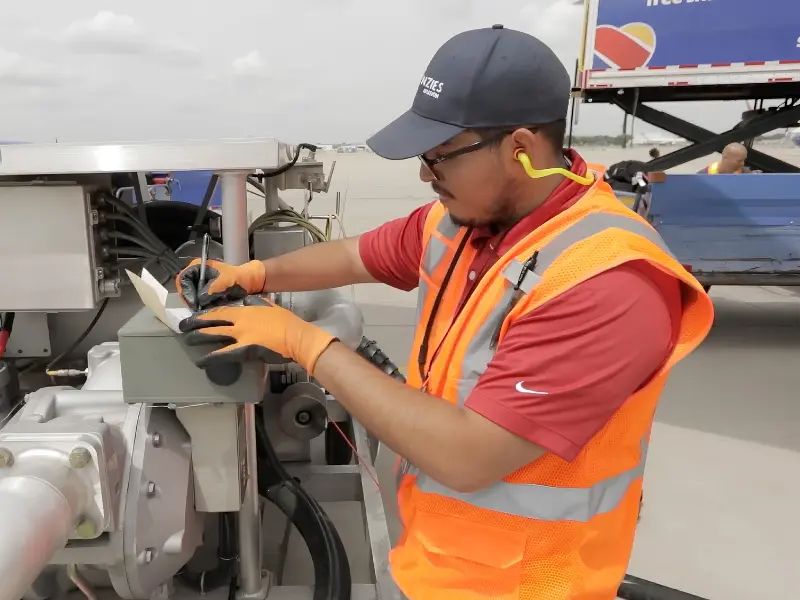
Fuel is often the last analog step in an otherwise digital turn. The figure lives on a paper docket that someone has to carry around the aircraft, and because every exchange is manual, neither the pilot nor the fueler can be certain exactly when the paper handovers will happen. In the worst case, if the fueler is not there for the pilot's walkaround, the pilot returns to the flight deck, comes back out to agree the load, goes back after fueling, then makes a further trip to collect the docket: up to four trips to move one number. More often it is that uncertainty over timing, rather than the number of trips, that causes the trouble, and that manual step is where delays, inefficiencies and most data errors begin. It is exactly what digital confirmation removes.
Speak to those who have made the move already, and they'll tell you the same thing. Ryanair's Steven Fitzgerald, Director of Sustainability and Finance, puts it plainly: "[it] created an interrupted workflow. It added extra steps, broke concentration, and slowed down the overall turnaround process."
Digitalization revolutionizes airline refueling with fully integrated, paperless solutions, helping airlines streamline operations, reduce turnaround times, and enhance sustainability. Sounds great, right? Done well, it turns the slowest manual step in the turn into a few seconds of connected data, captured once at the aircraft and shared with everyone who needs it. So how do you select the right platform for your business?
--------------------------
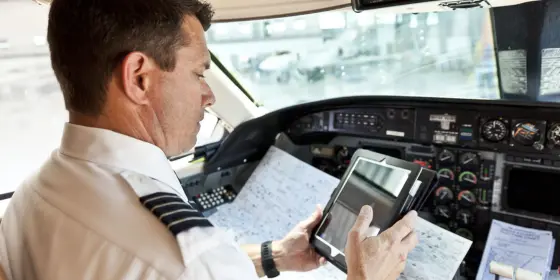
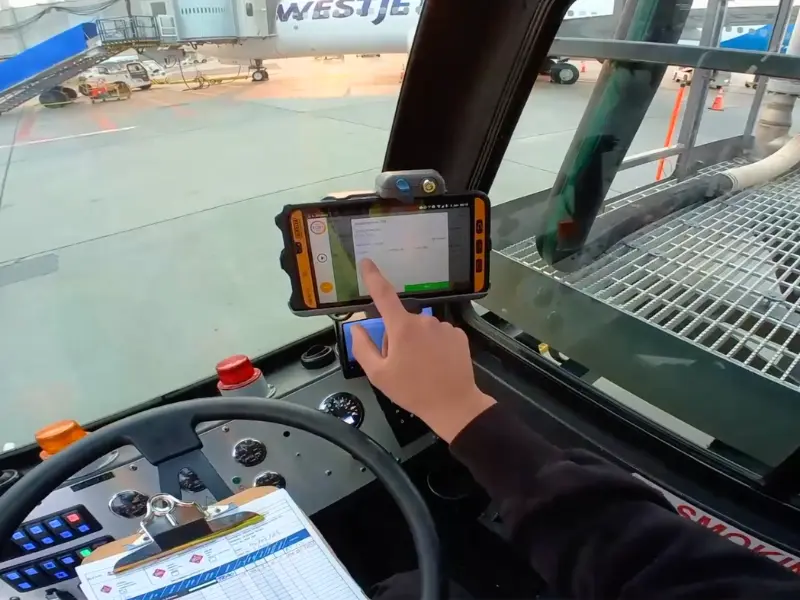
It replaces that paper fuel ticket with a live digital exchange between the flight crew and the into-plane fueler. The crew places the order, watches the uplift progress in real time, and confirms the final grade and quantity before the fueler leaves the stand. Instead of two sets of paperwork reconciled hours later, there is one agreed record, captured at the aircraft, the moment it happens.
It is not the same as a fuel management or fuel accounting system. Those handle inventory, invoicing and reporting further back in the chain. Confirmation software is the operational layer at the aircraft, and the quality of that layer is what determines whether the data feeding everything downstream is accurate.
--------------------------
--------------------------
The strongest systems do not wait for the aircraft to arrive. At Ryanair, some pilots now order their fuel before they leave the house. By the time the pilot reaches the aircraft, the order has already reached the supplier and the fueler.
This matters most for the first flights of the day. At larger bases, aircraft are pre-fueled before the pilots arrive to issue their orders, which can create a gap between the pre-fuel and the pilot's actual requirement and back up ground operations. "Allowing pilots to communicate the required fuel well in advance of the flight helps alleviate this problem," says Steven Fitzgerald, Director of Sustainability & Finance at Ryanair, "and it benefits on-time performance."
If a tool only captures data once fueling is under way, it cannot give you this. Pre-fueling is worth asking a vendor about by name.
--------------------------
Ask which of your airports and into-plane providers are already connected. Ask whether the crew can amend an order mid-uplift. Ask how the final quantity is agreed and stored. Ask what happens to the record after sign-off, and which downstream systems it reaches automatically. Ask for a named airline of similar size and network already using it.
--------------------------
The category has a few serious players. i6 eHandshake is built around the cockpit-to-fueler handshake itself, with real-time ordering, live uplift and a final digital confirmation of grade and quantity, and is in service with airlines including easyJet and Ryanair. aFuel (Information Design) is positioned as a neutral network connecting many airlines and into-plane providers. QT is a broader operational platform covering ramp-to-fuel-farm operations rather than the confirmation step alone. The right choice depends on whether you need the confirmation layer, a connecting network, or a whole-airport operational system.
--------------------------
The airlines already doing this are not running trials, they are running networks. Ryanair operates around 3,600 flights a day across 225 airports, every one built around a 25-minute turn. Over 30,000 of those flights a month now use digital fuel sign-offs with i6, saving roughly 5 to 10 minutes per flight.
The operational read from Ryanair: "Using i6 allows us to get the doors closed, allows the flight crew to communicate and accept the fuel figures at an earlier stage than ever before, and it keeps our operations on track. The feedback from pilots has been universally positive." The same platform is now the foundation for Ryanair's next target, cutting overfueling, which ties fuel confirmation directly to cost and emissions.
easyJet equipped its pilots with the i6 app to cut fuel use and emissions. In every case the win is the same: take the manual confirmation off the stand, and the turn gets quicker and the record gets cleaner.
KLM, one of the few airlines to run its own refueling department, saw the same effect on the back office. As Arno Linnenbank puts it:
"The administration used to be seven days a week, eight hours a day on paper fuel tickets. Now a shift leader can do it in under two hours a day, so we have saved at least six hours a day for one person."
--------------------------
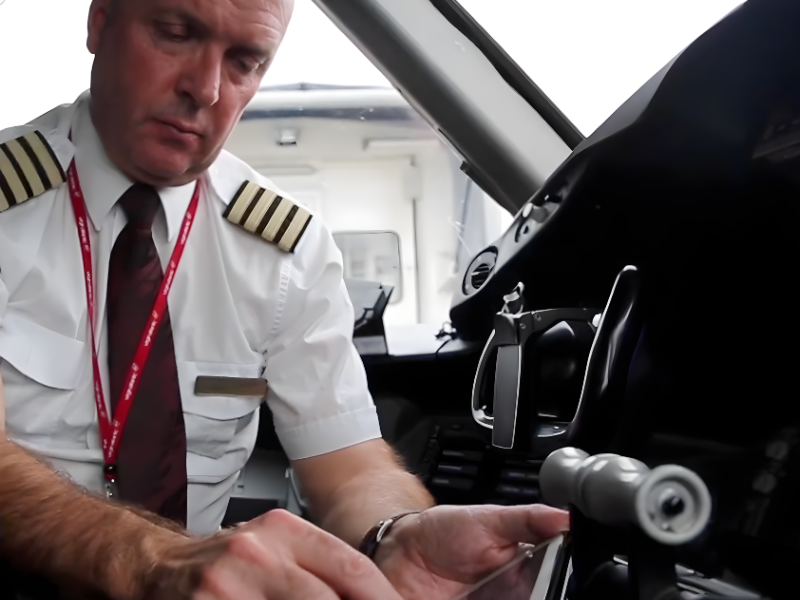
Airports, suppliers, and into-plane teams around the world are already modernizing their fuel operations with scalable digital tools. Maybe you have not explored what this could look like for your own site yet.
If you want to understand how real-time data, paperless workflows, and connected operations can improve resilience and sustainability, you can review our case studies and learn how similar operations have made the shift.
→ Explore real-world deployments and discover what digital fuel management could mean for your operation.